Postdoctoral Researcher
- Member of the EU-funded AIM project (EIC Pathfinder, ~€4M) under Prof. Núria López, developing AI-driven digital twins that link atomistic simulations to device-level performance in waste-to-value technologies.
Computational Chemist & ML Researcher
Predoctoral Researcher in Computational Chemistry specializing in the end-to-end development of machine learning interatomic potentials (MLIP). Expertise in Python-driven scientific computing, machine learning, and the orchestration of automated, high-throughput simulation workflows. Proficient in managing Linux-based systems and HPC environments to scale complex molecular simulations and accelerate catalyst discovery.
Delivered the Python training module for doctoral researchers.
Tutored bachelor's students in Introduction to Scientific Computing (Python) and Chemical Engineering.
Year: 2024 | Citations: 523
The oxygen evolution reaction is the bottleneck to energy-efficient water-based electrolysis for the production of hydrogen and other solar fuels. In proton exchange membrane water electrolysis (PEMWE), precious metals have generally been necessary for the stable catalysis of this reaction. In this work, we report that delamination of cobalt tungstate enables high activity and durability through the stabilization of oxide and water-hydroxide networks of the lattice defects in acid. The resulting catalysts achieve lower overpotentials, a current density of 1.8 amperes per square centimeter at 2 volts, and stable operation up to 1 ampere per square centimeter in a PEMWE system at industrial conditions (80°C) at 1.77 volts; a threefold improvement in activity; and stable operation at 1 ampere per square centimeter over the course of 600 hours.
Year: 2026 | Citations: 27
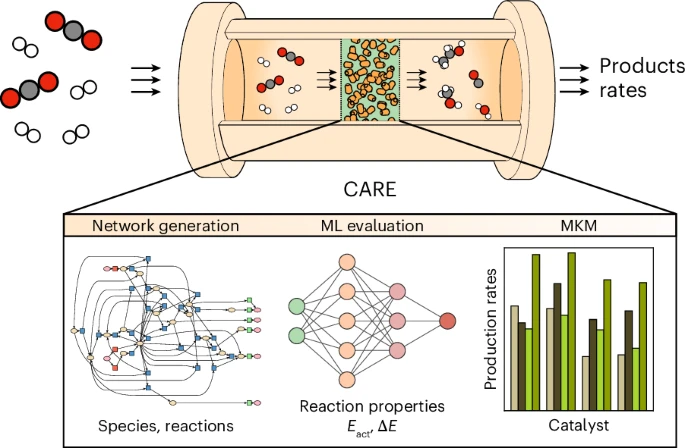
The rationalization of catalytic processes relies on the fundamental understanding of competing reaction mechanisms driving reactants to products. The list of elementary steps composing the reaction networks is proposed based on chemical intuition and evaluated via density functional theory. This approach is limited by the size of the network and disregards alternative paths. Here we present the Catalytic Automated Reaction Evaluator (CARE), a flexible end-to-end framework for heterogeneous catalysis composed of (1) a rule-based reaction network generator, (2) a thermodynamic and kinetic parameter evaluator powered by state-of-the-art machine learning models and (3) a fast microkinetic solver. CARE reproduces the experimental activity trends in methanol decomposition, identifies the selectivity to C3 products in CO2 electroreduction and generates the Fischer–Tropsch synthesis mechanism including 370,000 reactions reaching C6 products. This comprehensive framework enables the exploration of thermal and electrocatalytic reactions previously not amenable to atomistic simulations.
Year: 2025 | Citations: 24
Assessing the sustainability of plastic chemical recycling requires realistic feedstocks and catalysts designed within sustainability-led frameworks (Plastic-to-X). We link catalyst design and systems analysis to study hydrogenolysis of high-density polyethylene (virgin and bottle caps; Mw = 100–200 kDa). We report Ru–Ni alloy nanoparticles (3–4 nm) supported on titania that yield up to 55% liquid C6–C45 products under optimized conditions, whereas monometallic Ru produces virtually no liquids. Operando spectroscopy and simulations reveal structure sensitivity: backbone scission follows dehydrogenation and hydrogenation cycles at defective alloy sites formed in situ. Integrating these mechanistic insights with life cycle and techno-economic analyses indicates profitable processing of plastic caps over the optimal catalyst (2.5 wt% Ru, 5 wt% Ni) with substantially lower CO2 emissions even when using green H2. Furthermore, within the Plastic-to-X framework, we identify a minimum average chain length threshold of C11 for product distributions as a critical design metric to reconcile environmental and economic objectives.
Year: 2026 | Citations: 2
The design of low-temperature fuel cells and electrolyzers involving proton exchange membranes (PEMs) has been dominated by the exceptional performance and industrial dominance of Nafion. With emerging regulations banning the use of fluorinated compounds, the search for F-free alternatives must be accelerated. Here, we optimize a fluorine-free, sustainable, and low-cost liquid crystalline poly(epichlorohydrin) membrane, based on the identification of key descriptors for proton mobility obtained using machine learning interatomic potentials (MLIPs) derived from first-principles calculations for extensive molecular dynamics. Proton transfer is controlled by the interplay between water confinement and internal pore chemistry. This allows us to modify the active functional groups so that they directly participate in the proton diffusion process, increasing three times the diffusion rate in the membrane, thus being closer to Nafion standards. This work provides key descriptors for a targeted design approach essential for catalyzing the commercial development of next-generation fluorine-free PEMs.
Year: 2025 | Citations: 2
The design of low-temperature fuel cells and electrolyzers involving proton exchange membranes (PEMs) has been dominated by the exceptional performance and industrial dominance of Nafion™. With emerging regulations limiting the use of fluorinated compounds, the search for F-free alternatives must be accelerated. Here, we optimize a fluorine-free liquid crystalline poly(epichlorohydrin) membrane, based on the identification of key descriptors for proton mobility obtained using machine learning potentials derived from first-principles calculations for extensive molecular dynamics. Proton transfer is controlled by the interplay between water confinement and internal pore chemistry. This allows us to modify the active functional groups so that they directly participate in the proton diffusion process, increasing three times the diffusion rate in the membrane thus being close to Nafion standards. This work provides key descriptors for a targeted design approach essential for catalyzing the commercial development of next-generation fluorine-free PEMs.
Year: 2026 | Citations: 0
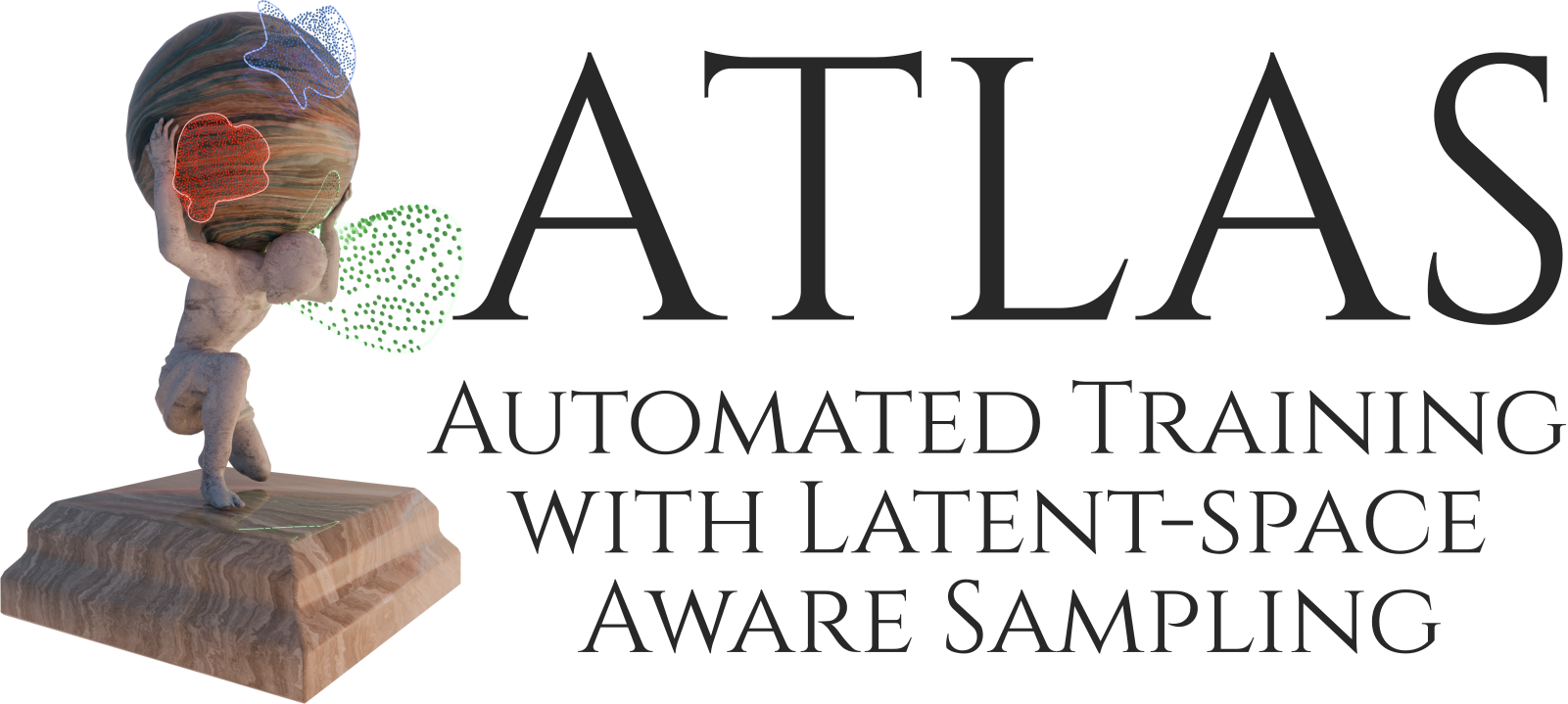
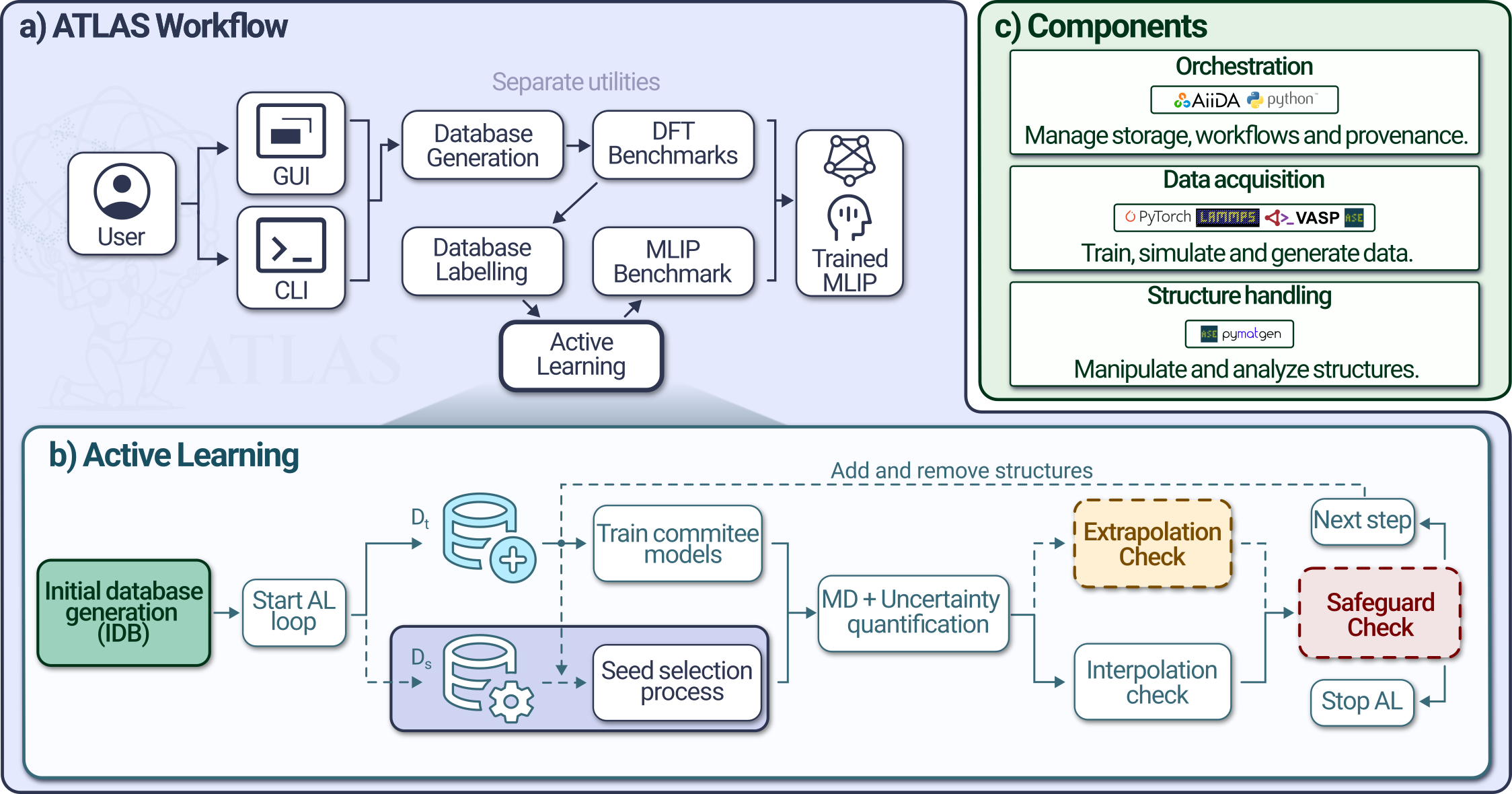
Machine learning interatomic potentials (MLIPs) enable atomistic simulations at near first-principles accuracy. As architectures mature, reliability is increasingly constrained by training data quality. Here, we introduce Automated Training with Latent-space-Aware Sampling (ATLAS), a model-agnostic framework built on a reversibly compressed latent space and reliability verification. The databases underpinning current foundation models overlap 96.9-99.5% in a configurational region occupying 29% of the collective area. Coupling a diversity-aware database generator with a manifold-aware active learning workflow steers exploitation toward sparse configurational regions while preventing premature convergence, yielding compact datasets training accurate MLIPs from up to 20x fewer structures. Evaluated on high-temperature phase stability, ATLAS-based models predict melting temperatures with deviations lower than 100 K for Cu and CuZn, and even including high temperature IrOx decomposition. ATLAS provides a principled and transferable strategy for building robust and well-balanced MLIPs across diverse materials, enabling high-accuracy applications.
Year: 2026 | Citations: 0
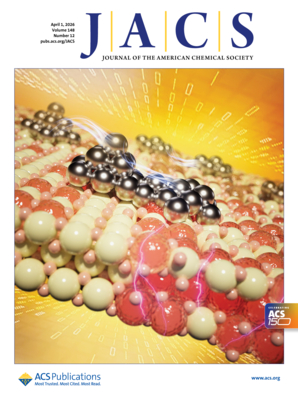
Metal–oxide interactions are ubiquitous in many technological applications and involve a complex interplay between the oxide support and the metal nanoparticle. Particularly, it has been proposed that in strong metal–support interaction, the defect chemistry affects the metal cluster morphology. Here we develop a physics-guided machine learning framework to decode these interactions using Pt7 and Pt13 representative of planar and tridimensional clusters, analyzing the impact of across oxygen vacancy concentrations of CeO2–x = 0–12.5% (528 configurations). Our models (R2 > 0.97) reveal that polaron swarms, rather than defect concentrations, predominantly control cluster shape and charge through size-dependent pathways. The framework yields quantitative design principles for defect-driven catalyst optimization and provides a general methodology for systematic mechanisms of metal–support interactions across diverse catalyst systems.
Predoctoral fellowship linked to project PID2021-122516OB-I00, funded by the Spanish Ministry of Science and Innovation (MCIN/AEI/10.13039/501100011033) and by the FSE+.
Back cover design for Digital Discovery, Issue 6, 2023.
Hands-on workshop that introduces modern methods for analysing high-dimensional scientific data, with a strong emphasis on autoencoders (AEs) and variational autoencoders (VAEs).
Workshop on Deep Learning optimization through GPU and CPU trace analysis using MareNostrum 5 hardware.
Acceleration of Python code leveraging the GPU through thenumba library.
Training on recognizing, preventing, and addressing harassment in professional and academic environments.
AI, biochemistry, catalysis, characterization and soft skill courses for predoctoral students.
*Official Cambridge English certification, verification number: B7586152.
Stars: 100
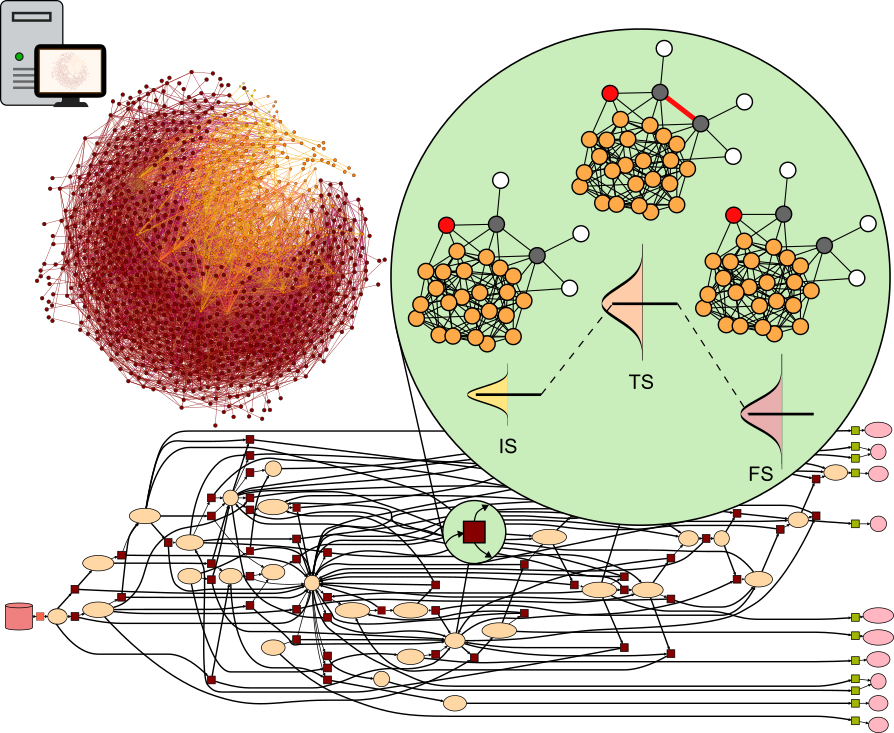
Automated creation and manipulation of chemical reaction networks (CRNs) in heterogeneous catalysis, powered by state-of-the-art ML evaluators and Julia-solvers for microkinetic modelling.
Stars: 8
An automatic workflow for streamlining training and data generation for MLIPs via active learning, using latent-space aware design.